Vault Records

Narrative, historical, and testimonial texts of varying reliability

Contextual | Contested | Preserved with care

Vault Records preserve accounts shaped by memory, context,
and interpretation rather than certainty.

They include sanctioned histories, speculative reconstructions, contested documents, and fragmentary testimonies — each released with its provenance intact.

Within the fiction, these materials are recovered from the Twilight Vault during a period of existential threat, released selectively to prevent their loss or misuse.

Outside the fiction, they are curated texts that privilege implication over exposition and context over guarantee.

Records do not promise clarity. They promise care.

  • Narrative & Mythic Accounts

    Speculative fiction, mythic retellings, and lived perspectives shaped by belief and memory.

  • Historical Reconstructions

    Chronicles, translations, and annotated editions whose authority derives from provenance rather than certainty.

  • Recovered & Disputed Texts

    Marginalia, testimonies, and documents preserved despite contradiction or incompleteness.

Conditions of Preservation

Truth and Reliability

Vault Records do not claim absolute truth. They preserve someone’s truth — often that of a situated narrator within the World of Erdia. Where reliability is uncertain, every reasonable effort is made to signpost limitations, gaps, or distortions.

Records may lie. Records may be mistaken.

These qualities are not defects when they are preserved honestly and scrutinised carefully.

Contradiction and Debate

Conflicting Records are not suppressed. They are preserved with explicit debate, counter‑debate, conjecture, and reflection. Contradiction is treated as both a risk and a feature — dangerous within the fiction, generative in practice.

Some Records may be privileged by individual curators. Others remain unresolved. Resolution is not guaranteed.

Reader Obligation

Records are issued with the expectation that their keepers will treat them with respect — as fragments of a world under strain and warnings carried forward.

Skepticism is required. Attention is assumed.

Interpretation is encouraged, but not demanded. Editorial voices may guide, contextualise, or annotate, but they do not dictate meaning.

Human Authorship

Works issued as Records are created through human authorship. While tools may assist drafting or analysis, the final structure, language, and intent are the product of human judgement and care.

No Record is issued that has been generated solely by automated means.

Emotional Register

Records may unsettle, inform, haunt, or inspire. Discomfort is an acceptable outcome when it serves understanding.

Emotional engagement is not incidental; it is part of the record’s function.

Framing and Presentation

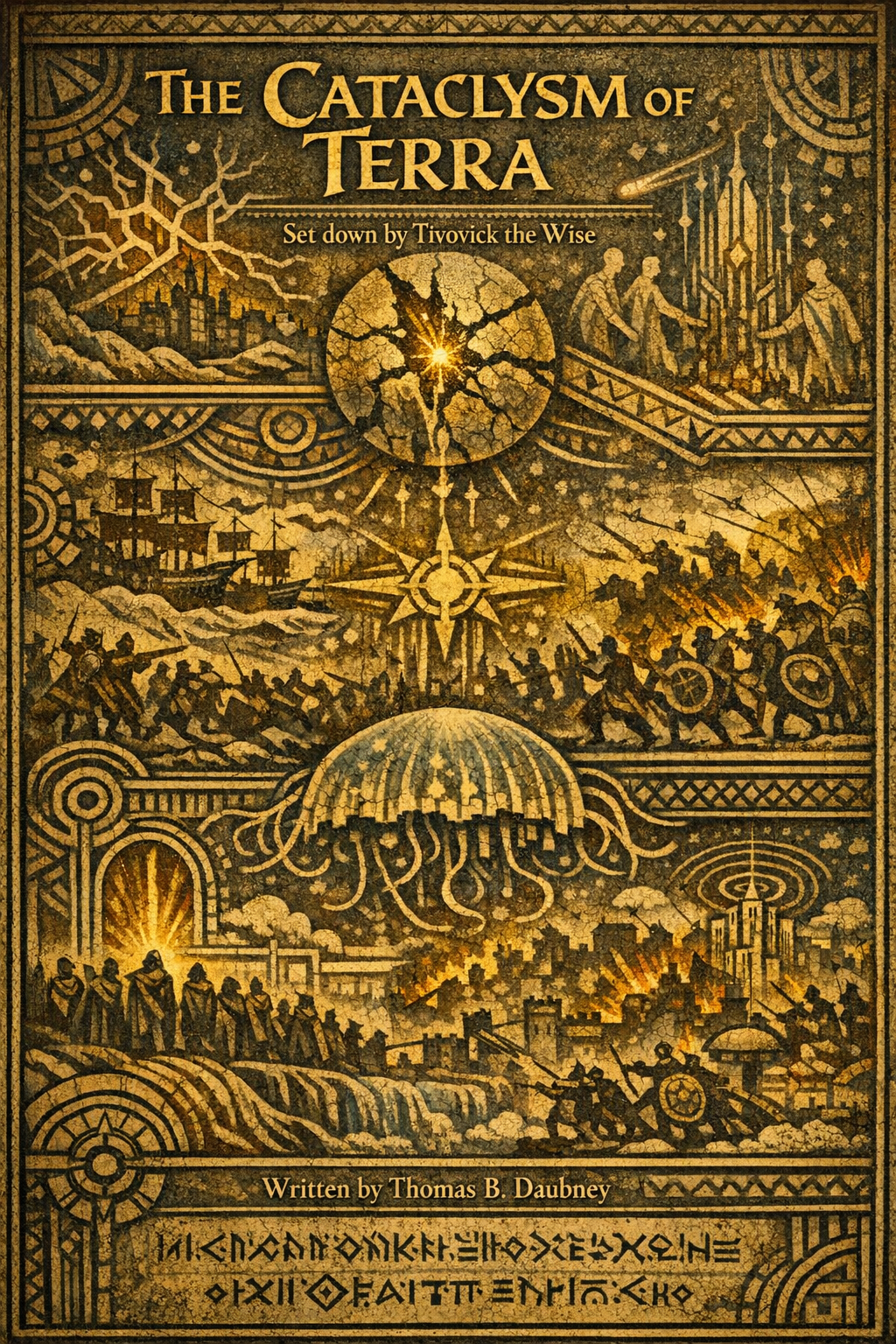
Presentation varies according to source, era, and condition. Records may break visual consistency, appear damaged, or remain incomplete.

Framing exists to support comprehension — never to instruct the reader how to feel.

Records may appear as books, free archival entries, or distributed fragments across Vault channels.

Limits of Ambiguity

Ambiguity is preserved, but not weaponised. The Vault refuses to hide behind uncertainty to excuse harm, exploitation, or deliberate provocation.

Where dark elements are present, they are contextualised and, where necessary, clearly signposted.

Records that breach ethical, legal, or curatorial standards are not released.

Vault Records are not unified by truth value, but by care in preservation.

They are issued as artefacts — not entertainment alone, not instruction, but warnings carried forward from a world that believed balance was permanent.

Contextual | Contested | Preserved with care